Food forest & permaculture design
We turn tired yards, farms, and schoolyards into places that feed you.
We design and install food forests, native plantings, and water-smart landscapes that fit your land and the time you actually have to look after them. Our fieldwork is insured through Terramorph. When a project requires state- or trade-specific credentials, we coordinate the right licensed professionals.
We offer consultation and design across the United States. Whether we can install depends on the site, the season, permits, the trades involved, and who's available locally.
What we offer
Food Forests
A forest never replants itself in spring. It layers: tall trees, small trees, shrubs, herbs, ground covers, roots, and vines, each catching the light the one above it missed. A food forest keeps that structure and fills it with things you can eat.
Most of it is perennial, so the work shifts from replanting to tending. We map where the sun falls, where water moves, how you'll reach the harvest, and what you actually want to eat, then design the layers around that.
Good forHomes, farms, schools, and community spaces that want to grow food for years, not just one season.
What you getA layered planting plan built around what you want to harvest, the wildlife you want around, and how much care you can give it.
Permaculture Systems
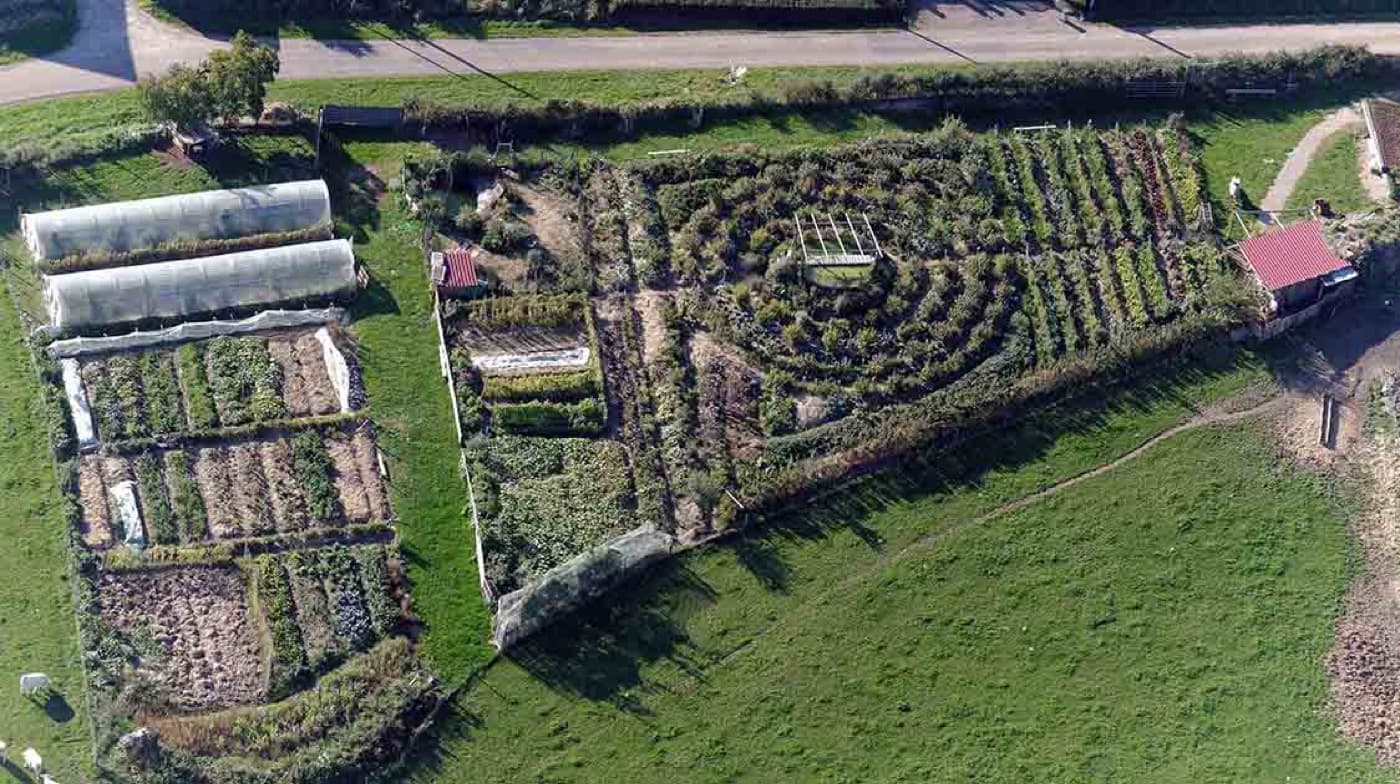
In a healthy landscape, nothing has only one job. Permaculture is the practice of placing things so they work for each other: compost beside the garden, the garden beside the kitchen, rainwater sent to the roots that need it.
An inch of rain on a 1,000-square-foot roof is about 620 gallons. We read your slope, drainage, sun, wind, and daily paths so the water, the soil, and your own footsteps all do more with less effort.
Good forProperties where the water, paths, gardens, and daily chores are fighting each other instead of working together.
What you getA plan for the whole property with clear priorities, so you know what to do first and what can wait.
Regenerative Agriculture
Soil is slow to make and quick to lose: it can take up to a thousand years to form a few centimeters of it. Regenerative agriculture builds it back by keeping the ground covered, slowing water, mixing plants, and leaving room for wildlife.
We look at slope, compaction, drainage, what's growing now, how you get around, and how much time you have. Then we help you decide where to start.
Good forFarms, homesteads, and acreage where the owners want healthier soil and a better way of working the land.
What you getA plan for your land: where water goes, what to plant, how you'll get around, and what to tackle in what order.
Native Ecosystems
Belonging takes thousands of years to earn. Most plant-eating insects can feed on only a few plants they evolved with, and most songbirds raise their young on those insects. Native plants restock the bottom of that food web.
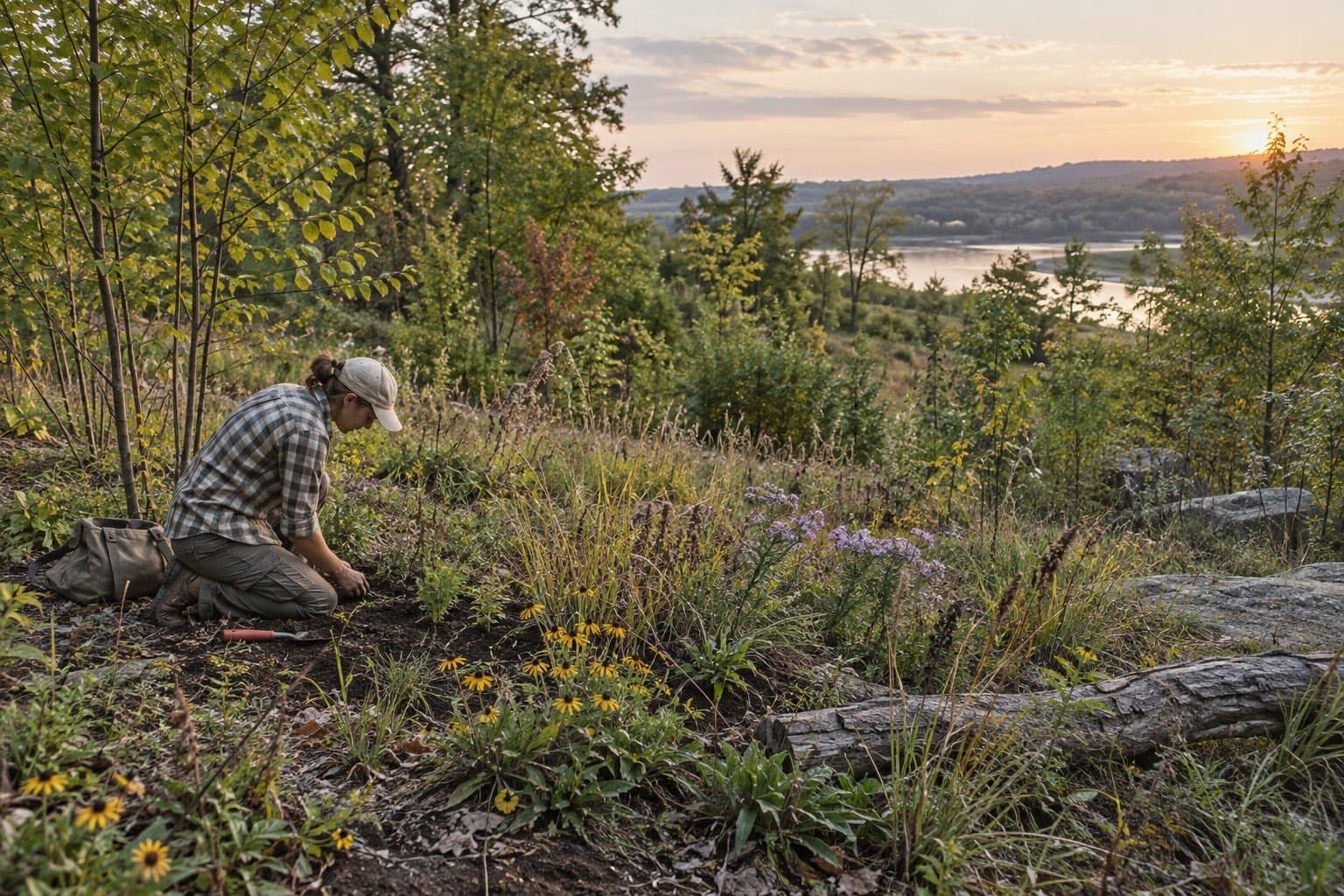
We start with what's already there: the plants, the soil, where water sits in spring, and what's been torn up. Then we plan the repair, whether it's one garden bed or a few acres.
Good forHomes, farms, schools, and shared land that want more native plants and more wildlife.
What you getA list of what to restore first and a native planting plan that fits your site.
Invasive-species Removal
An invasive plant isn't wicked, just out of place, free of the checks that held it back at home. Invasive species were a major factor in 60% of recorded plant and animal extinctions. Pulling one out is half the job: if nothing good fills the gap, it returns.
First we make sure we've identified it correctly and know the local rules. Then we think through timing, method, what else could get hurt, bare soil, what gets planted next, and the follow-up.
Good forLand where invasive plants are crowding out the things you want to grow.
What you getA step-by-step plan to remove the invasives and replant, based on the species, your site, and local law.
Ecological Consultation
Sometimes the most useful thing is a second pair of eyes. A consultation is us walking your land with you and saying plainly what we see: what's working, what isn't, and what we'd do next.
It might answer one specific question. Or it might help you decide whether you need a full design, a plan, or just a few changes.
Good forAnyone who wants an experienced second set of eyes before spending money.
What you getClear notes on what we saw, your top priorities, and an honest recommendation for what to do next.
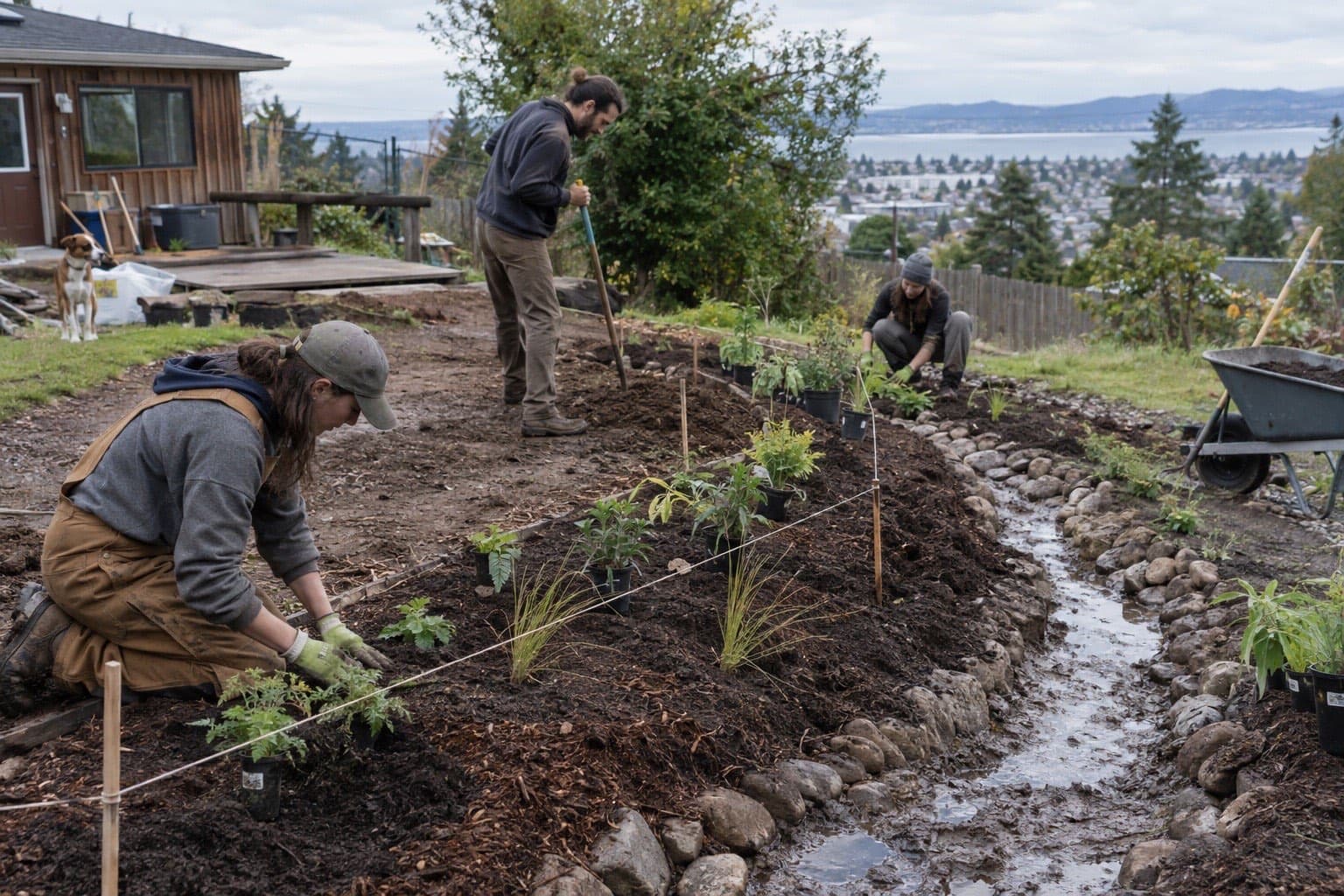
Design + Build
A plan only matters once it's in the ground. After you sign off on a design, we build it, and we keep its intent intact from the drawings to the dirt.
That can include site prep, installation, working with other trades and suppliers, and the early care new plants need, all planned around the weather, site conditions, and what you can keep up with afterward.
Good forProjects that are ready to go from plan to ground.
What you getFinal design details, sourcing, installation, and a clear plan for the first months after.
Common questions
Before you reach out.
What does it cost?
It depends on the land, how much you want to do, and how far we travel. Before any design or installation starts, we agree on a written scope, schedule, and payment terms for your project. The project form has an optional budget range so we can suggest what fits.
Do you work where I live?
We offer consultation and design anywhere in the United States. Whether we can install depends on the site, the season, permits, the trades involved, and who's available locally. We'll tell you plainly once we know your land.
How long does it take?
It depends on the size of the job and the season. Planting has a best window where you live, so we plan around it, and the schedule is written down before any work starts.
Is my place too small?
No. We work on backyards, farms, schoolyards, and shared land. A single garden bed can be a good place to start.
Are you licensed and insured?
Our fieldwork is insured through Terramorph. When a project requires state- or trade-specific credentials, we coordinate the right licensed professionals.
What happens after I write to you?
We read every message ourselves and reply using whatever contact details you give us. Then we talk through your land and decide together whether a consultation, a full design, or a few changes makes the most sense.
Not sure where to start?
Tell us about the land. We'll help you see what it could become.
Your yard, your farm, or ground you share with a school or neighborhood. Send us a few details and we'll take it from there.