Invasive-species removal, followed by replanting
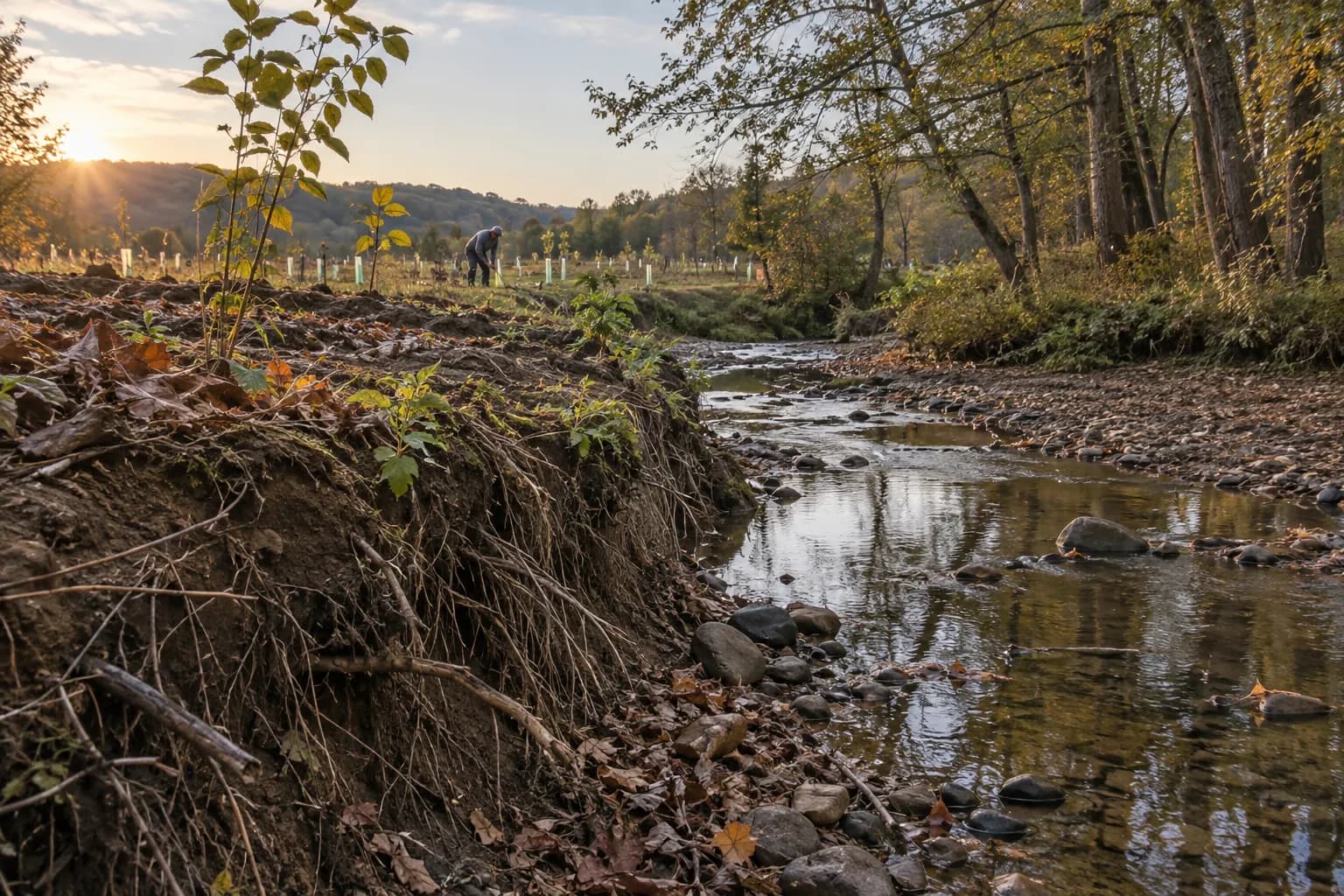
An invasive plant isn't wicked, just out of place, free of the checks that held it back at home. Removing it is half the job. Filling the gap with the right plants is the other half.
- Good for
- Land where invasive plants are crowding out the things you want to grow.
- What you get
- A step-by-step plan to remove the invasives and replant, based on the species, your site, and local law.
Why it matters
Federal policy defines an invasive species as a non-native species whose introduction causes, or is likely to cause, economic or environmental harm or harm to human health. Globally, the IPBES 2023 assessment found invasive species were a major factor in 60% of recorded plant and animal extinctions.
On a single property the harm is quieter: thickets that crowd out native shrubs, vines that smother trees, ground where little else can grow. University of Maryland Extension names common culprits including Callery pear, English ivy, autumn olive, Japanese honeysuckle, Japanese barberry, and multiflora rose.
How we approach it
First we make sure we've identified the plant correctly and know the local rules. Then we think through timing, method, what else could get hurt, bare soil, what gets planted next, and the follow-up.
- Confirm the species and check your state's invasive list and any local regulations.
- Choose removal methods and timing that protect the plants and wildlife you want to keep.
- Plan the replanting at the same time as the removal.
- Schedule follow-up visits to catch regrowth while it's still small.
Replant fast
University of Maryland Extension advises replanting with natives as soon as possible after removal, because cleared ground is easily taken over again, and continuing to monitor and spot-treat. A removal without a replanting plan usually means doing the same work again next year.
Licensed help when it's needed
Some removal methods and some sites call for specific licenses or permits, and the rules vary by state. When a project requires state- or trade-specific credentials, we coordinate the right licensed professionals. Our fieldwork is insured through Terramorph.
We offer consultation and design across the United States. Whether we can do the removal and replanting ourselves depends on the site, the season, permits, the trades involved, and who's available locally.
How we work, in five steps
- ListenEvery piece of land comes with people attached. We sit down with you and ask a lot of questions: what you want this place to do, what frustrates you about it now, and what you'd never change.
- ReadLand is never a blank page. We walk the site slowly and more than once: where water runs and pools after a storm, where shade falls in July, what the soil is like, what's already growing, and which animals use the place.
- DesignA good design is mostly decisions about relationships. We turn what we found into a plan: what goes where, what to plant, how water moves, where people walk, and how much upkeep you can honestly handle.
- BuildTiming is half of planting. We put it in the ground, sequencing jobs and materials around the weather and site conditions, and working around the plants and wildlife already living there.
- StewardA landscape is never finished, because it's alive. We come back to see what took off, what struggled, and what didn't make it, and we adjust.
Read before you call
Sources
- Executive Order 13112: Invasive Species U.S. Department of the Interior
- Media Release: IPBES Invasive Alien Species Assessment (4 September 2023) IPBES
- Removing Invasive Plants and Planting Natives University of Maryland Extension
- Autumn Olive (EXT072) UConn Extension
- Multiflora rose USDA National Invasive Species Information Center