
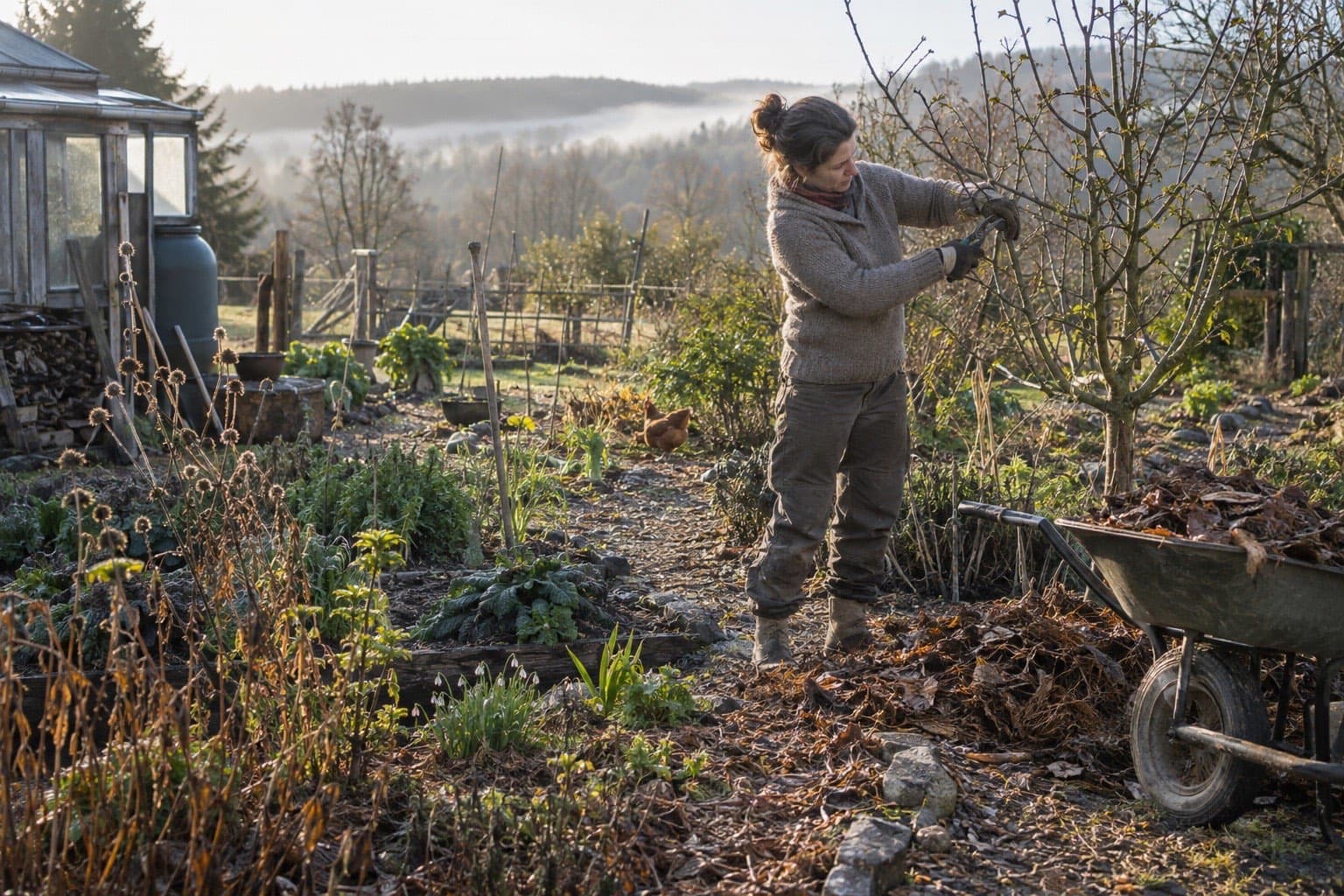
Caring for a young landscape: the first three years
Planting day is a beginning, not a finish line. The first three years decide whether a young landscape takes hold. Here's what that care actually looks like.
The first three years decide everything
A new planting looks finished the day it goes in. It isn't. For the first few years most of the real growth happens underground, where roots are working out whether this place can be home.
Gardeners have a saying for native perennials: sleep, creep, leap. Purdue University's Landscape Report describes the pattern as mostly root growth in year one, more leaves and some flowers in year two, and plants that may reach full size by year three. Trees take longer. University of Minnesota Extension estimates about a year and a half of establishment for every inch of trunk thickness, and Penn State Extension uses about a year per inch in colder climates.
Water deeply, then less often
New roots dry out fast. University of Minnesota Extension suggests watering newly planted trees and shrubs daily for the first two weeks, every two to three days through about week twelve, and then weekly until they're established. For trees, it recommends 1 to 1.5 gallons per inch of trunk thickness each time, and not skipping a watering for rain unless about an inch fell that day.
Climate changes the numbers. University of Florida guidance for warm climates calls for 2 to 3 gallons per inch of trunk, two or three times a week after spring or summer planting. Check with your own state's extension service, and let the soil, not the calendar, have the last word.
Mulch right: a donut, not a volcano
Mulch saves water, cools the soil in summer, insulates it in winter, smothers weeds, and slowly feeds soil life as it breaks down. The International Society of Arboriculture recommends 2 to 3 inches of fine mulch or 3 to 4 inches of coarse wood chips. On soils that stay wet, keep it nearer 2 inches.
Keep it off the trunk. Mulch piled against bark invites insects, disease, and roots that circle and choke the stem. Illinois Extension compares these mulch volcanoes to planting a tree too deep. Leave a gap of a few inches, a donut hole, and spread the mulch out wide toward the drip line rather than up high.
Weeds: patience in year one
In a new native meadow, pulling weeds can do more harm than good, because the young seedlings aren't rooted well enough to survive the disturbance. University of Illinois Extension recommends mowing instead: in year one, cut to about 6 inches whenever weeds reach 12 to 18 inches tall, and never let them go to seed. In year two, mow once or twice, set higher. By year three, the natives should be gaining ground.
Prairie started from seed can take three to five years to establish, Illinois Extension notes. In beds and around young trees, the mulch does most of the weeding for you; pull what gets through while the weeds are small.
Prune young fruit trees lightly
At planting, the International Society of Arboriculture advises removing only dead or broken branches and saving structural pruning for the second or third year. Young trees need their leaves to grow roots.
When you do prune, timing matters. NC State Extension recommends waiting until late winter, since young trees are more prone to winter injury from early pruning. Oregon State University's home orchard guide puts it simply: prune after the danger of hard freezes has passed but before new growth begins. Keep wide branch angles, space the main branches around the trunk, and cut just outside the collar where a branch meets the trunk.
Read the plants
Plants tell you what they need, but the signals can be confusing. University of Maryland Extension notes that plants with too much water show the same symptoms as plants in drought: wilting, yellowing, and leaf drop. That's why checking the soil matters.
Look at how the trunk meets the ground. It should flare out where it becomes roots. Illinois Extension describes a trunk that goes straight into the ground like a telephone pole as a sign of a tree planted too deep. Maryland Extension notes that a buried flare can hide roots circling the trunk, which cause yellowing and dieback. If you find them, cut them while they're small.
- Too dry: wilted or curled leaves, older leaves yellowing and dropping.
- Too wet: soil that never dries, young leaves turning pale or yellow.
- Planted too deep: no visible flare at the base of the trunk.
- Stakes left on: the ISA recommends removing stakes after the first year.
After a big storm
Walk the land after heavy rain. Virginia Cooperative Extension lists the warning signs of erosion: exposed roots or stones, small rills or gullies, silt collecting in low spots, and soil splashed up onto walls.
Act quickly. Penn State Extension advises filling rills and gullies before they grow deeper and wider, covering the ground again, and dealing with where the runoff comes from. Don't leave soil bare over winter: mulch it or sow a cover crop.
Keep a landscape journal
The most useful stewardship tool is memory, and memory is unreliable. Write things down. Note when plants leaf out, flower, and fruit, what struggled, and what came back.
Photographs help even more. The USDA Forest Service's Photo Point Monitoring Handbook describes taking pictures from the same marked spots over time, so change becomes easy to see. Illinois Extension suggests photographing a new prairie every month. If you want to share what you see, the USA National Phenology Network's Nature's Notebook program lets backyard observers and schools record the seasonal timing of plants and animals for scientists to use.
Sources
- Establishing a Native Perennial Garden: Sleep, Creep, Leap Purdue Landscape Report
- Watering newly planted trees and shrubs University of Minnesota Extension
- Meeting the Watering Needs of a Newly Planted Tree Penn State Extension
- Planting and Establishing Trees UF/IFAS Gardening Solutions
- Proper Mulching Techniques International Society of Arboriculture
- Mulching Trees and Shrubs The Morton Arboretum
- Tree troubles usually start at the base of the trunk University of Illinois Extension
- Backyard Prairies University of Illinois Extension
- Extension Gardener Handbook, Ch. 15: Tree Fruit and Nuts NC State Extension
- Training and Pruning Your Home Orchard (PNW 400) Oregon State University Extension
- Pruning Young Trees International Society of Arboriculture
- New Tree Planting International Society of Arboriculture
- Tree Problems Caused by Excess Water University of Maryland Extension
- Free the Flare University of Maryland Extension
- Environmental Horticulture Guide to Nutrient Management (426-613) Virginia Cooperative Extension
- Soil Erosion Checkup and Repair Penn State Extension
- Home Landscape Practices to Protect Water Quality (426-723) Virginia Cooperative Extension
- Photo Point Monitoring Handbook (PNW-GTR-526) USDA Forest Service
- Nature's Notebook USA National Phenology Network
General guidance, not advice for a specific site. Local conditions, rules, and your county extension office come first.