
Growing shiitake mushrooms on logs
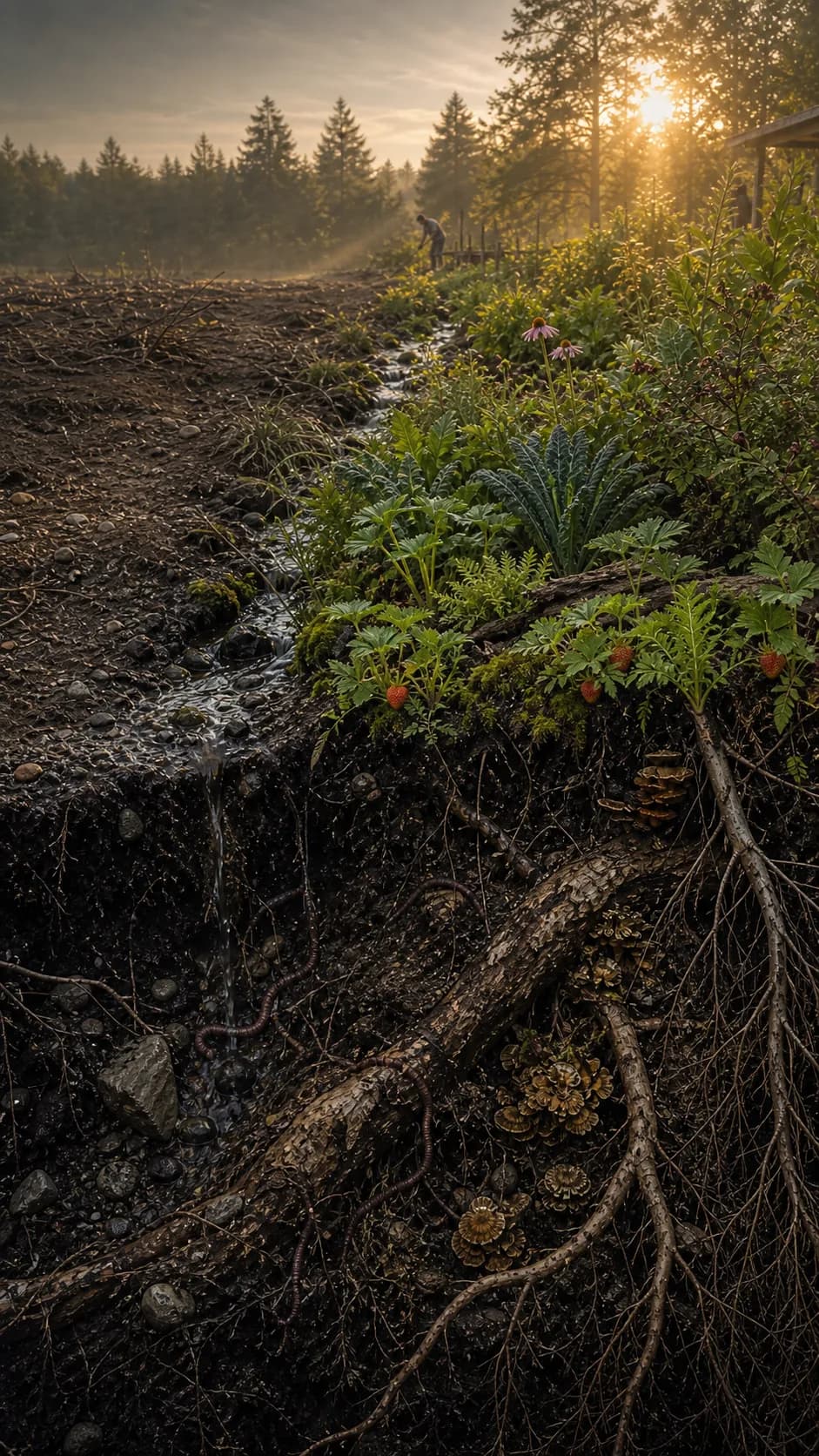
Fungi are the forest's hidden layer. Growing shiitake on logs puts that layer to work in a shady corner of your land, and turns small trees into food for years.
Mushrooms from the forest floor
In every healthy forest, fungi are quietly turning wood back into soil. Growing mushrooms on logs is a way of joining that work. The USDA National Agroforestry Center describes it as forest farming: growing high-value crops under a managed forest canopy, often using small logs from thinning that would otherwise go to waste. It notes that log-grown mushrooms tend to have a firmer texture and more flavor than those grown on sawdust blocks.
The guidance below comes mainly from Best Management Practices for Log-Based Shiitake Cultivation, published by Cornell University and the University of Vermont.
Choose the right logs
Oak is the gold standard, according to the Cornell guide, though sugar maple, beech, and musclewood (ironwood) can do as well or better. Red maple, poplar, black locust, fruitwoods, and ash are less suitable. Cornell's research found red and white oak perform about the same, and oak tends to stay productive for more years.
Size matters. The guide recommends logs 4 to 6 inches across, which have the most of the outer sapwood the fungus grows through, and 3 to 4 feet long so they're easy to carry. The USDA note adds that a 4-foot log 8 inches across can weigh up to 80 pounds.
Cut at the right time
Cut trees while they're fully dormant, before the buds swell, when the bark is tightest. The USDA note puts the season at roughly Thanksgiving to St. Patrick's Day. Logs cut in late spring or summer are more likely to lose their bark, and intact bark is what holds moisture in.
The Cornell guide recommends inoculating within a day to three weeks of felling; sooner is better. Winter-cut logs can wait until early spring if they're kept out of the sun.
Inoculate the logs
Spawn comes as wooden plugs or as sawdust. Plugs need only a drill and a mallet, but they're slower and cost a little more; sawdust spawn is cheaper and colonizes faster but needs a special inoculator tool.
The spawn run and the laying yard
Then you wait. The fungus needs time to colonize the whole log, which the Cornell guide puts at 8 to 18 months and the USDA note at 6 to 18. You can try to force fruit after a year, but Cornell research found that waiting 14 to 16 months gave significantly bigger harvests.
Logs rest in a laying yard with 75 to 100% shade year-round. Conifer shade is best; under hardwoods, the guide suggests adding shade cloth or pine boughs in winter. The north side of a building can work too. Keep the logs from drying out: the guide notes spawn dies if a log's moisture drops too low.
Force the fruit
Once a log is colonized, you can choose when it fruits. Soak it in cold water for 12 to 24 hours, and mushrooms usually appear within one to two weeks. Each log then needs about 40 days of rest before you force it again, so many growers split their logs into groups and rotate them through the season.
Pick mushrooms and refrigerate them within an hour, at about 41°F, in paper rather than plastic.
What to expect, and selling
The Cornell guide estimates peak production in a log's second and third years, at roughly a quarter to half a pound per log each time it's forced, with two forcings a season. Over about five years, that's roughly 3 to 4 pounds per log.
If you plan to sell, check with your state agriculture department first. The Cornell guide notes that selling processed mushroom products, like dried or cooked mushrooms, is regulated state by state and usually requires a licensed kitchen.
Sources
- Best Management Practices for Log-Based Shiitake Cultivation in the Northeastern United States Cornell University and University of Vermont Extension
- Shiitake BMP resource page Cornell Small Farms Program
- Farming Exotic Mushrooms in the Forest (Agroforestry Note 13) USDA National Agroforestry Center
General guidance, not advice for a specific site. Local conditions, rules, and your county extension office come first.